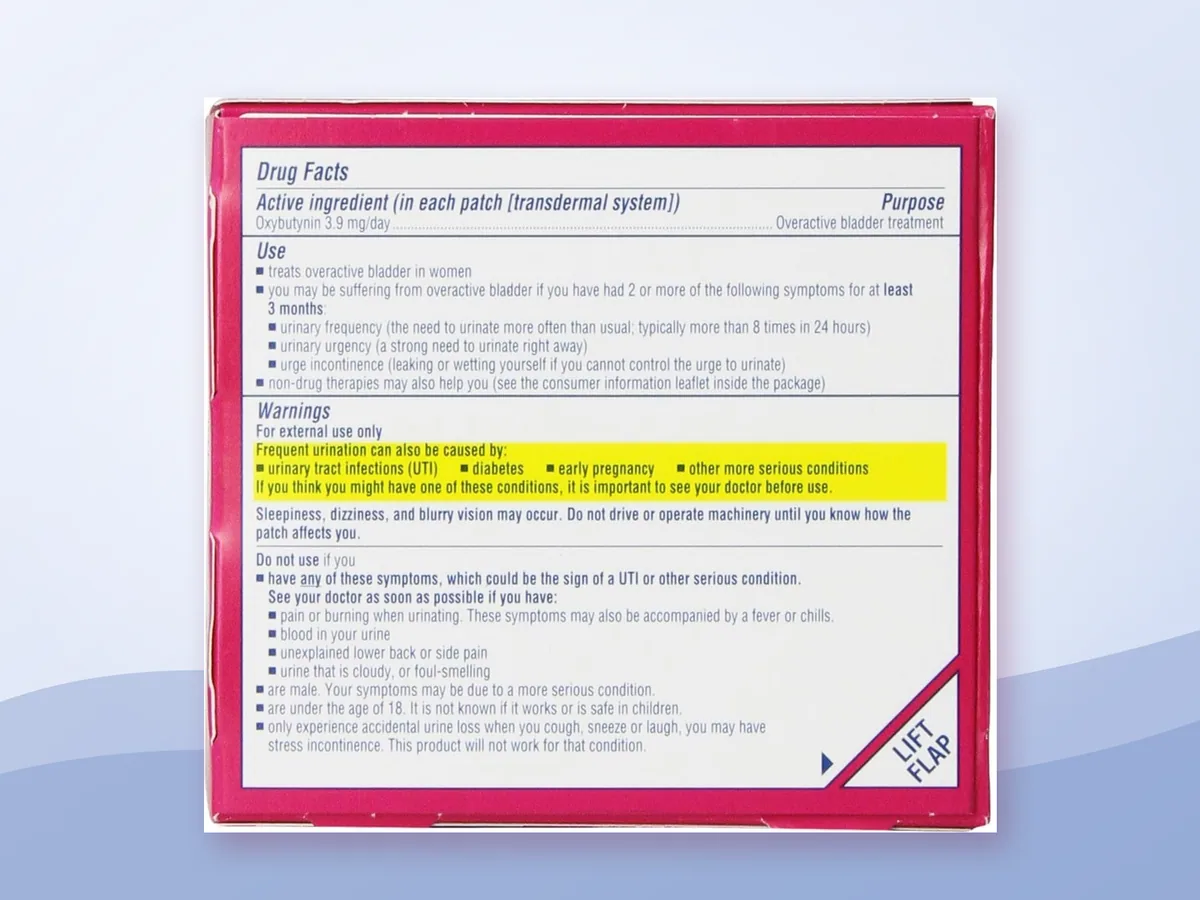
The label
The Oxytrol for Women Drug Facts Label, Line by Line: Who It Is For, Warnings, How to Wear the Patch
Active ingredient, the three symptoms, every warning and the 4-day routine, one line at a time.
Options compared
A patch is one way to deal with an overactive bladder. Health agencies describe several others, and most of them can sit side by side.
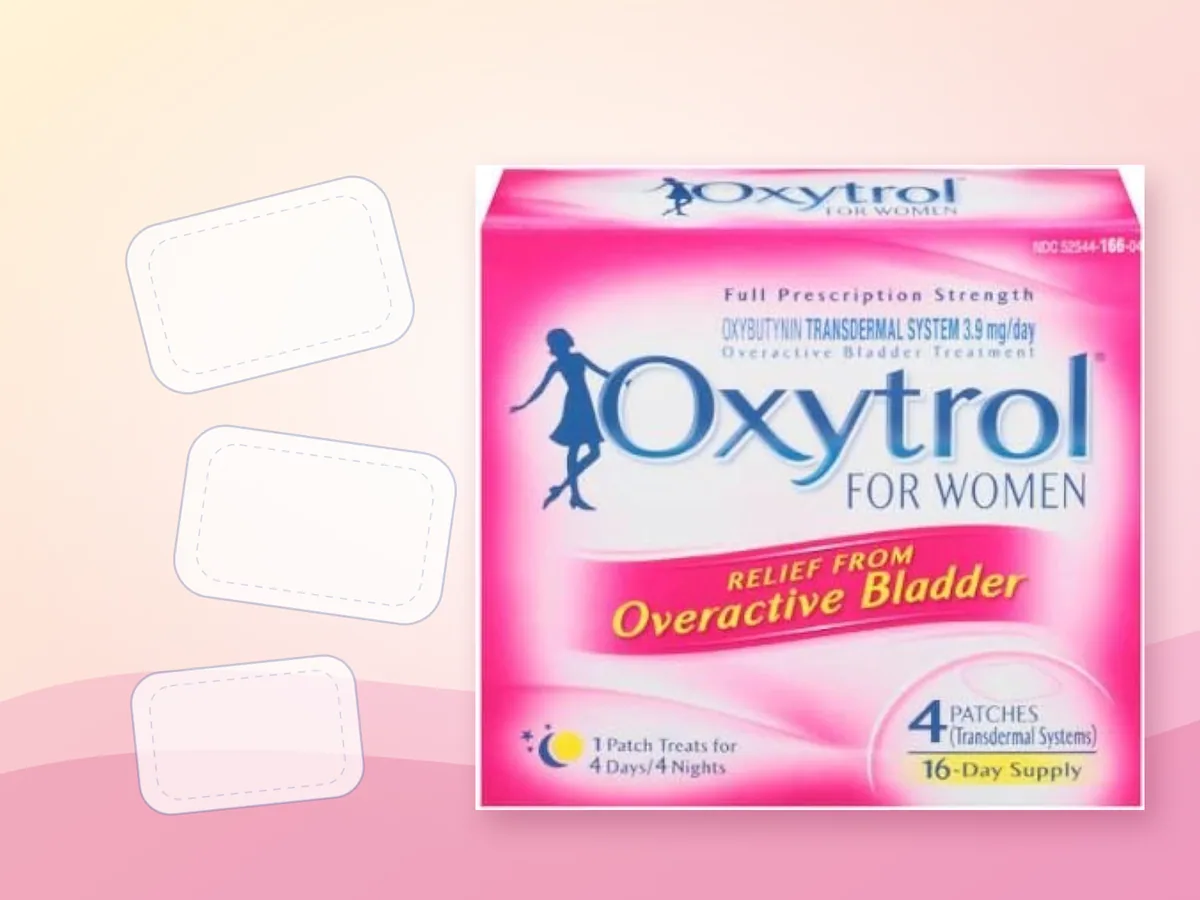
When a bladder starts to run your day, the first search usually turns up a wall of products. Pads on one shelf, a pink box of patches on another, and a note to "ask your doctor" on everything. It is hard to see how the pieces fit.
They fit better than the shelf suggests. U.S. health agencies describe a small set of routes, and most of them can run side by side. Oxytrol for Women is one of those routes: a medicine you can buy without a prescription, with a label that says who it is for.
The patch facts here come from its Drug Facts label. Everything else comes from the agencies named beside each quote. None of it is advice about your case.
The routes only make sense once you know what they are aimed at. Agencies sort bladder control problems by their symptoms, and two kinds come up most often in women.
With stress incontinence, everyday actions that use the pelvic floor muscles, such as coughing, sneezing, or laughing, can cause you to leak urine.
That is stress incontinence. Pressure on the bladder does it, not an urge. The second kind works the other way round.
Urge incontinence happens when people have a sudden need to urinate and cannot hold their urine long enough to get to the toilet.
This second kind goes by several names. The National Institute of Diabetes and Digestive and Kidney Diseases links two of them.
Urgency incontinence is often referred to as overactive bladder.
The difference matters for one practical reason. The Oxytrol for Women label treats overactive bladder, and it says plainly that the product will not work if you only leak when you cough, sneeze or laugh. So the first question is not "which product". It is "which kind".
| Stress incontinence | Urge incontinence, or overactive bladder | |
|---|---|---|
| What sets it off | Coughing, sneezing, laughing, physical activity | A sudden, strong urge to urinate |
| What it feels like | A leak with the movement, no warning urge | Not reaching the toilet in time, or going very often |
| On the Oxytrol for Women label | "This product will not work for that condition" | The condition the patch is labelled to treat |
Life is not always that tidy.
You can have urgency and stress incontinence at the same time, which is called mixed incontinence.
If that sounds like you, the label does not shut the door. It rules out the patch only where pressure leaks are your sole symptom. A doctor or nurse can help you work out which kind is doing most of the damage.
One more fact puts the whole subject in proportion.
Urinary incontinence affects twice as many women as men.
Common does not mean you have to live with it. The same institute that defines the terms is blunt about that.
Although UI is common, it is not a routine part of being a woman or getting older.
Four routes come up again and again. They are not rivals in a contest. Agencies describe people using two or three of them together.
| Absorbent pads | Habits and exercises | Oxytrol for Women patch | Prescription medicine | |
|---|---|---|---|---|
| What it is | Disposable pads or protective underwear | Bladder training, pelvic floor exercises, changes to drinks | A skin patch with oxybutynin 3.9 mg/day | A medicine chosen by a doctor |
| What it does | Absorbs leaks | Trains the bladder and the muscles around it | Treats overactive bladder in women, per its label | Helps relax the bladder muscle |
| Who starts it | You | You, often with a doctor or nurse guiding | You, if you are a woman 18 or older and the label fits | A doctor |
| Works on which kind | Any leak | Depends on the habit or exercise | Overactive bladder only | Depends on the medicine |
| Worth asking about when | You need protection today | You want to begin without a medicine | You have 2 of the label's 3 symptoms for 3 months | The label rules the patch out, or 2 weeks brought no change |
Pads are the route most women find first, because they solve today's problem today. Agencies treat them as a sensible tool, not as a failure.
You can wear disposable pads in your underwear to absorb leaking urine.
The Office on Women's Health makes the point about timing.
You can also buy pads or protective underwear while you take other steps to treat urinary incontinence.
Note the phrase "while you take other steps". A pad catches a leak. It does not change how often the urge comes or how strong it is. Agencies place pads alongside the other routes, not in place of them.
They also keep pads on the list after other routes have done their work.
Even after treatment, you may still leak urine from time to time.
So pads and a patch are not an either-or choice. Nothing on the Oxytrol for Women label speaks against wearing a pad while you use the patch. The two do different jobs.
| Absorbent pad | Oxytrol for Women patch | |
|---|---|---|
| Kind of product | A hygiene product | An over-the-counter drug with a Drug Facts label |
| Aimed at | The leak after it happens | Overactive bladder, the condition named on the label |
| Rhythm | Changed as needed through the day | 1 patch for 4 days in a row |
| Who can use it | Anyone | Women 18 and older, with exclusions listed on the label |
| Better choice when | You want protection now, whatever the cause | Your symptoms match the label's rule and none of its warnings apply |
The second route costs nothing and asks for patience. It appears on the patch's own label, in one easy-to-miss line.
non-drug therapies may also help you (see the consumer information leaflet inside the package)
The leaflet is in the box. The agencies describe the same therapies in public, and bladder training heads the list.
Bladder training is when you urinate on a schedule to reduce leaking.
The idea is to put the clock in charge, not the urge.
You can help control overactive bladder or urge incontinence by going to the bathroom at set times.
The Office on Women's Health describes the method in steps. You track how often you go in a bladder diary. Then you slowly add about 15 minutes between bathroom visits, and you urinate each time, even if you do not feel the urge. The aim, in the words of the other agency:
Gradually lengthening the time between trips to the bathroom can help stretch your bladder so it can hold more urine.
Both agencies frame this as something to do with a health care professional, who can read your diary with you and set the schedule.
It is tempting to drink less so there is less to leak. The Office on Women's Health answers that question with a flat no.
But you need fluids, especially water, for good health.
What you drink is another matter.
Limiting foods and drinks with caffeine, such as chocolate, tea, coffee, and carbonated beverages, may help reduce leaks.
That agency also advises limiting alcoholic drinks, which can increase how much urine your body makes. The patch label has its own reason to mention alcohol: drinking it may increase sleepiness while you use the product.

Pelvic floor exercises, often called Kegels, are the best-known home exercise for leaks. The reasoning is simple.
Strong pelvic floor muscles hold in urine better than weak muscles.
Agencies link these exercises most closely to stress incontinence. The Office on Women's Health says that if you have stress incontinence, Kegel exercises to strengthen your pelvic floor muscles may help. That is the kind of leak the patch is not for, so the exercises and the patch are aimed at different problems.
There is overlap all the same. The National Institute of Diabetes and Digestive and Kidney Diseases notes that pelvic floor exercises can also help control the urge to urinate, and that quick, strong squeezes can help suppress urgency when it occurs.
One caution comes with them.
Talk to your doctor or nurse about your urinary symptoms before doing Kegel exercises.
The reason given is that some women have urinary symptoms because their pelvic floor muscles are always tightened. For them, the agency says, Kegel exercises will not help and may cause more problems.
Now the pink box. Oxytrol for Women differs from every route above in one respect: it is a drug. It differs from the route below in another: you can buy it without a prescription. FDA records show it was approved for over-the-counter sale on January 25, 2013, as a switch from prescription status.
Its label is short on promises and long on conditions. The promise is five words.
treats overactive bladder in women
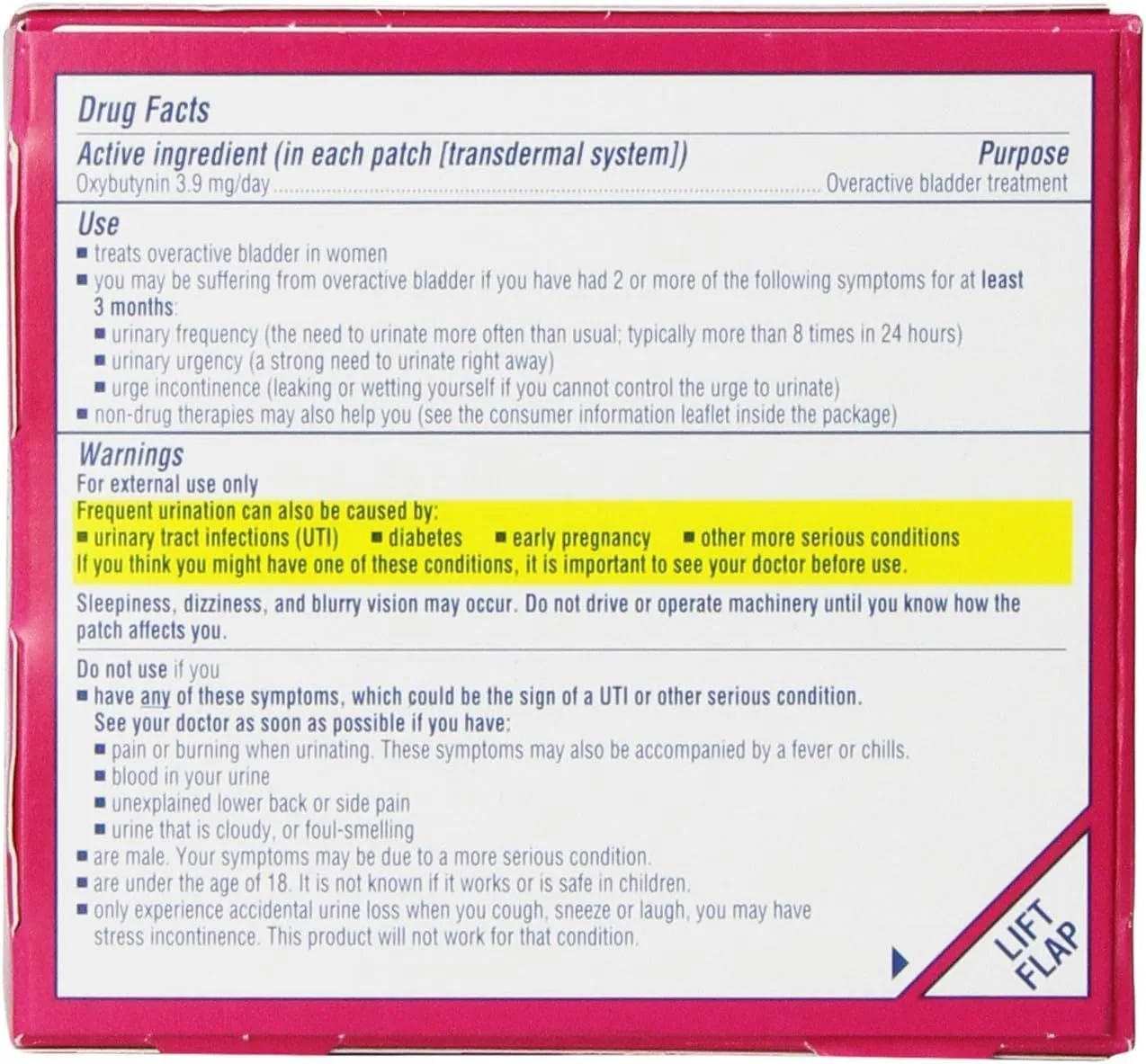
The conditions take up most of the panel. Here are the ones that decide whether this route is open to you.
| Question | What the label says |
|---|---|
| Who is it for? | Women 18 years of age and older |
| Which symptoms? | 2 or more of: frequency, urgency, urge incontinence, for at least 3 months |
| Who is ruled out? | Men, anyone under 18, and women with urinary retention, gastric retention, glaucoma or an allergy to oxybutynin |
| Which leaks are ruled out? | Leaks only when you cough, sneeze or laugh |
| When to see a doctor first? | Pain or burning when urinating, blood in the urine, unexplained lower back or side pain, cloudy or foul-smelling urine |
| When to stop? | If the condition does not improve after 2 weeks, among other cases |
The routine is the part buyers like or dislike. You wear one patch for 4 days in a row on your abdomen, hips or buttocks, under clothing, and then you put a new one on a different place. There is nothing to swallow and nothing to remember each morning.
The price of that convenience is on the label too. It warns that sleepiness, dizziness, confusion and blurry vision may occur, and that you may have itching, rash or redness where the patch was placed.
The U.S. National Library of Medicine adds a sentence about what the ingredient does and does not do. It is written about oxybutynin patches in general.
Transdermal oxybutynin controls the symptoms of overactive bladder but does not cure the condition.
Buyers describe both sides. One writes about sleep.
I feel like I'm catching up on years of interrupted sleep!
Another gave up after one patch.
I wore it for four days as recommended before changing it, but found it too uncomfortable and didn't apply a new one.
Neither review tells you what will happen to you. Together they show the range. The full label is in our line-by-line guide.
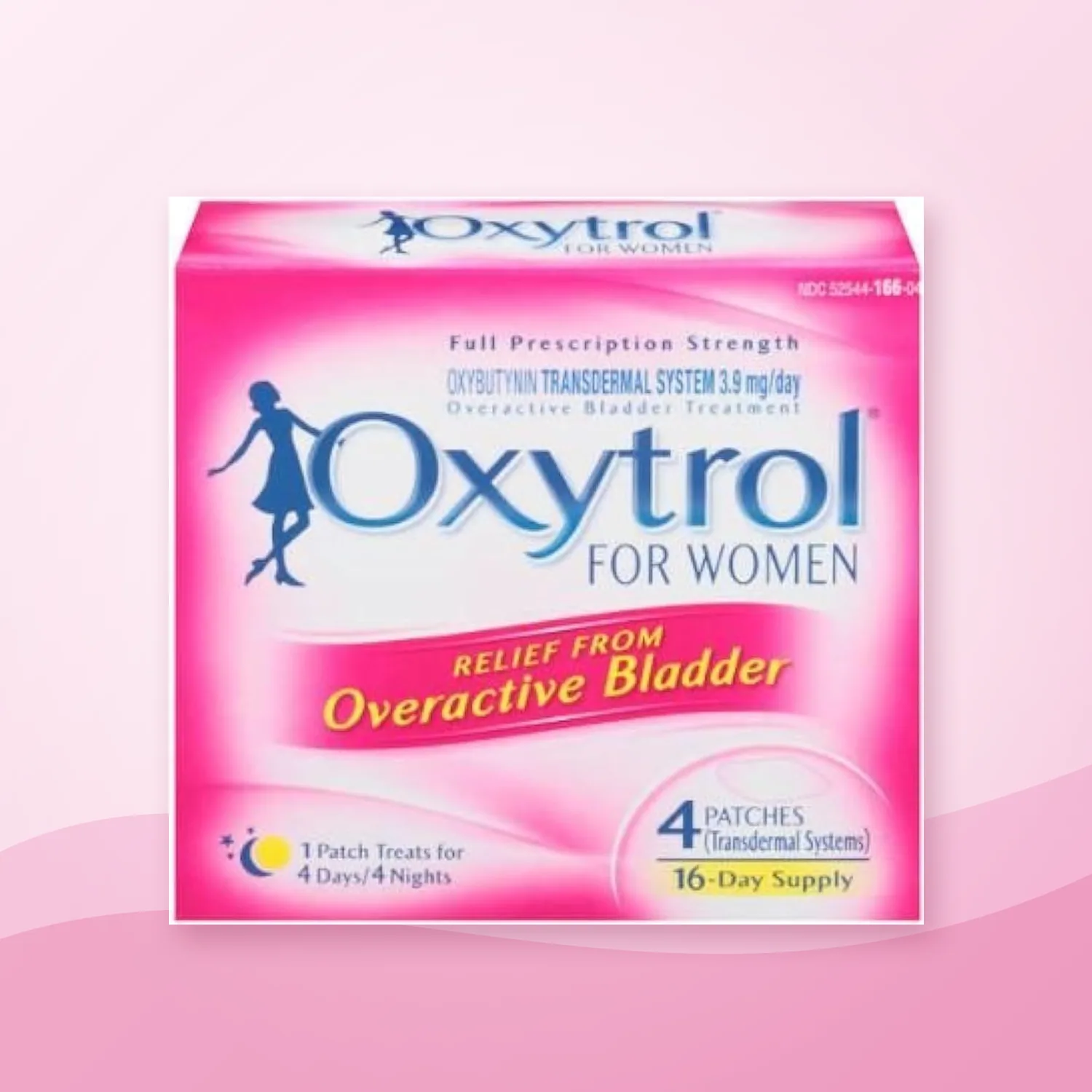
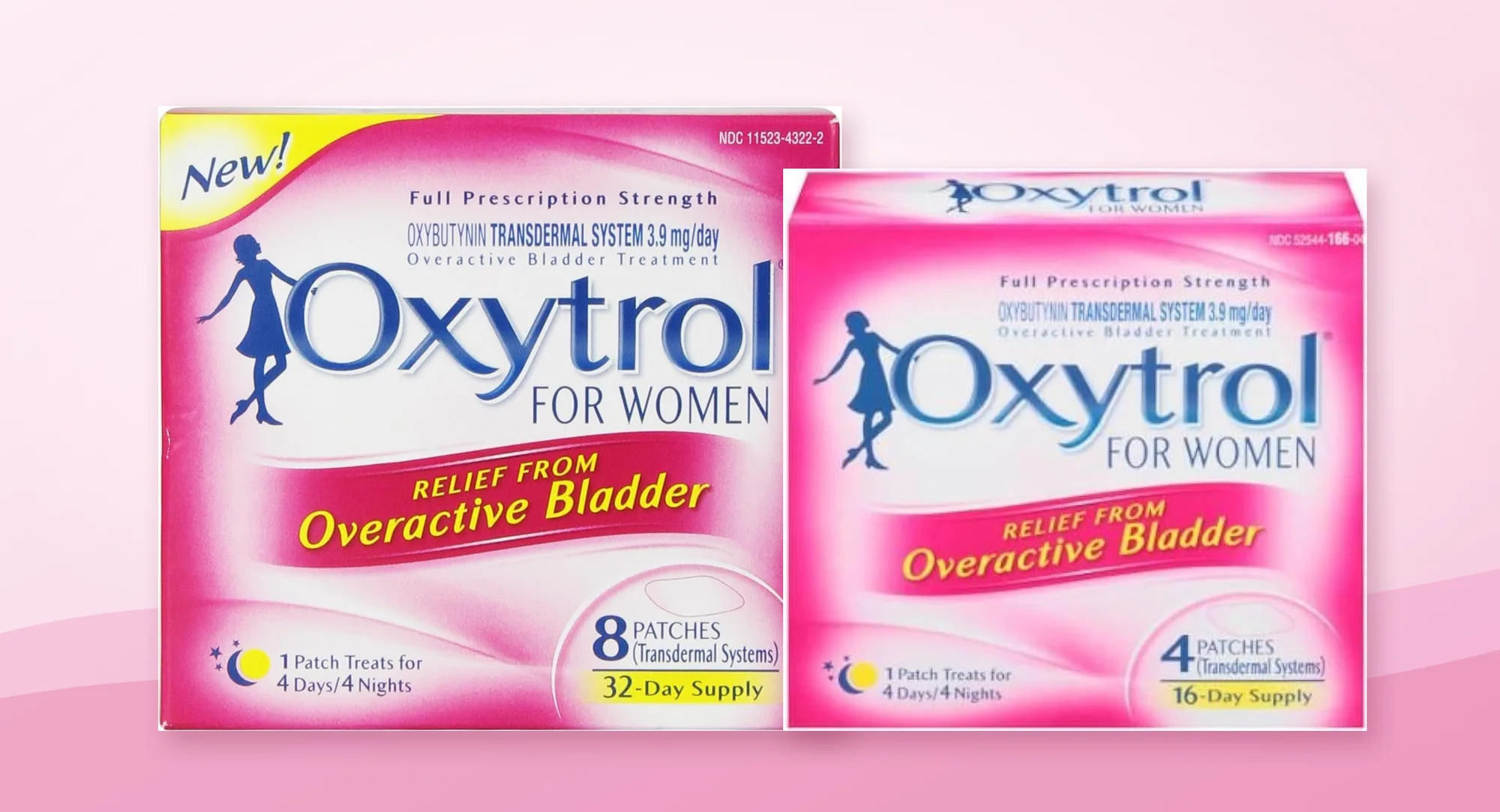
Of the four routes, the patch is the only one with a price in this guide. A day of wear costs from $0.80 to $1.38, depending on the pack. The sum is simple: the price of a patch divided by 4.
The small box is the natural way in. 1 box, 4 patches of the 4-Patch Box cost $17.88 and last 16 days, which carries you past the 2-week mark the label sets. Our guide to boxes and packs has every pack.
The fourth route runs through a doctor's office. The National Library of Medicine describes it in two sentences: your doctor may prescribe a medicine that can calm muscles and nerves, and that medicine takes more than one form.
The medicine may come as a pill, a liquid, or a patch.
The Office on Women's Health explains what such medicines are for.
Medicines to treat urge incontinence help relax the bladder muscle and increase the amount of urine your bladder can hold.
It lists common side effects of these medicines as constipation and dry eyes and mouth. The same page names further options a doctor may raise if home steps do not improve urge incontinence, among them Botox injections in the bladder and nerve stimulation.
Where does that leave the over-the-counter patch? The label draws the line itself. Ask a doctor or pharmacist before use, it says, if you are taking a prescription medication for overactive bladder. The patch is not meant to be stacked on top of a prescription without someone checking.
The label also sends you towards this route in two situations. One is when its warnings rule you out. The other is the 2-week line.
condition does not improve after 2 weeks of use
That line appears under "Stop use and ask a doctor if". In other words, a patch that has not helped in 2 weeks is the label's own cue to move to the fourth route.
Every route above assumes the problem is what it looks like. The patch label does not assume that. It lists other causes of frequent urination: urinary tract infections (UTI), diabetes, early pregnancy and other more serious conditions.
If you think you might have one of these conditions, it is important to see your doctor before use.
It then names signs that could point to a urinary tract infection or another serious condition. With any of these, the label says, do not use the patch, and see your doctor as soon as possible.
And it lists conditions to raise with a doctor before use: symptoms of diabetes, such as excessive thirst, extreme hunger, unexplained weight loss, and liver or kidney disease.
None of this is small print for its own sake. A pad, a diary and a patch all work on the bladder. If the cause lies elsewhere, they can keep you comfortable while the real problem waits.
This article describes options in the words of a product label and public health agencies. It cannot tell you which one suits you. A doctor, nurse or pharmacist can.
Read the sources side by side and a pattern shows. None of them presents a single answer. The label mentions non-drug therapies next to its own use. The agencies mention pads next to treatment. Each route covers something the others leave open.
| Route | Covers | Leaves open |
|---|---|---|
| Pads | Leaks, right away | The urge and the frequency |
| Bladder training | The interval between bathroom trips | Protection while the training takes hold |
| Pelvic floor exercises | The muscles that hold urine in | Cases where the muscles are already too tight |
| Oxytrol for Women patch | Overactive bladder in women, per the label | Stress incontinence, and everyone the warnings rule out |
| Prescription medicine | Cases a doctor judges need it | The wait for an appointment |
A woman with urgency and the occasional leak might wear a pad, keep a bladder diary and try a box of patches in the same month. That is a description of how the routes fit, not a plan for you. Your own mix is a question for someone who knows your history.
If you are standing at the shelf, or the screen, these questions put the routes in order. Each one comes from the label.
If you pass all five, the label leaves the patch route open to you, and the small box is the cheaper way to find out. If you stop at any of them, you have learned something useful before spending a dollar.
Whatever you choose, give it a fair window and then judge it. The label's window for the patch is 2 weeks, and pads stay on the agencies' list the whole time.
Nothing here is medical advice. The article repeats a product label and public health sources. Read the Drug Facts label on your own box, and ask a doctor or pharmacist about your own case.
Sources read for this guide
The label
Active ingredient, the three symptoms, every warning and the 4-day routine, one line at a time.
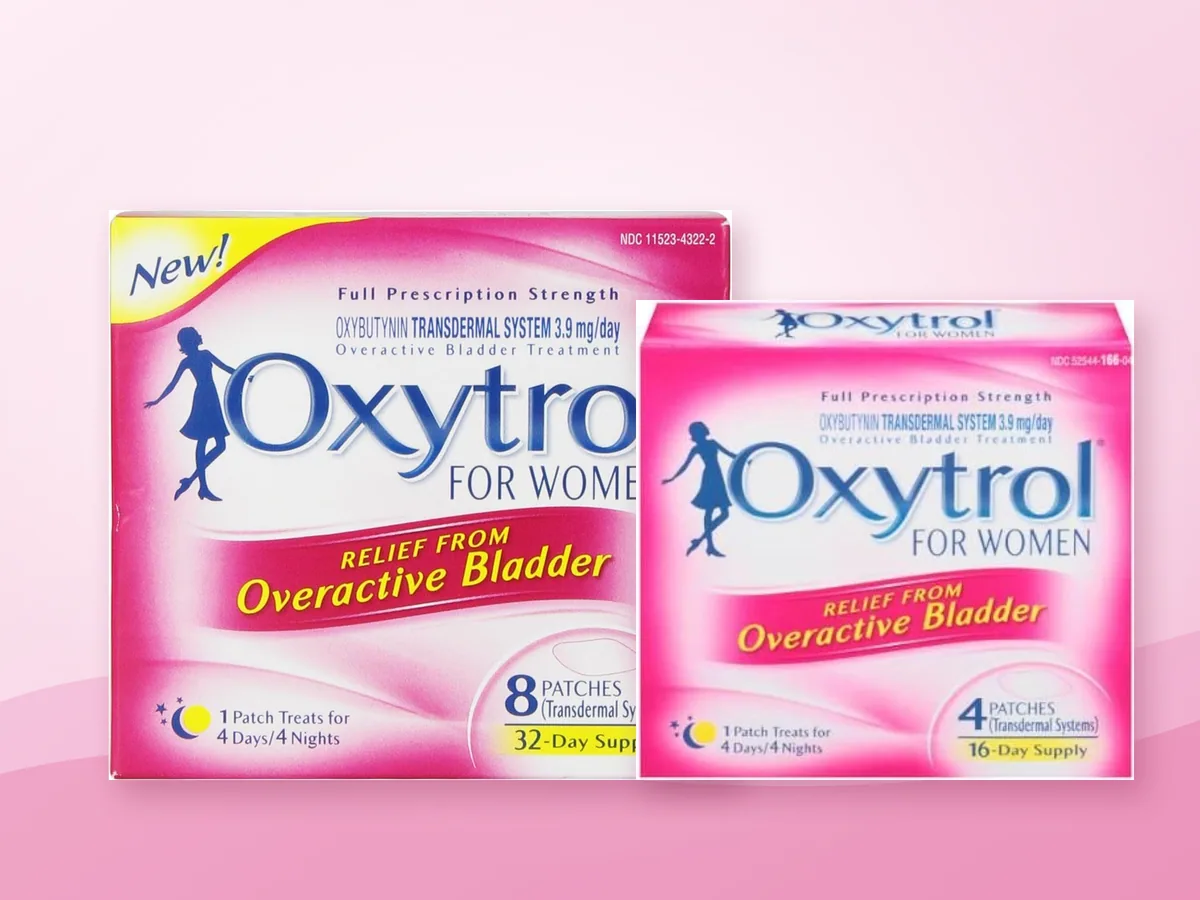
Boxes and prices
Four patches or eight, every pack priced per day, and the case for starting small.